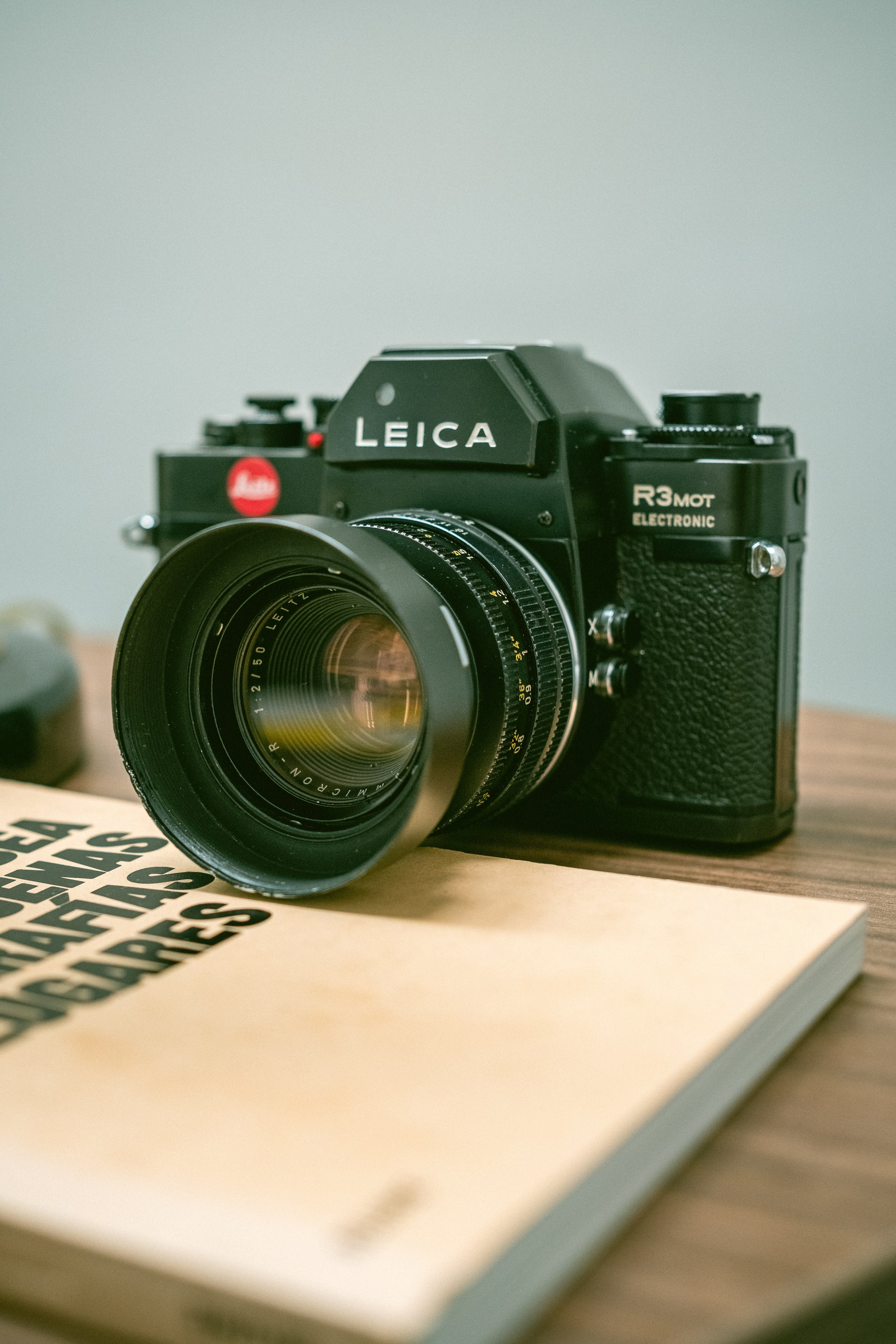
The Leica R3 occupies a pivotal and somewhat controversial place in R-system history. It was the first R-body to offer aperture-priority automatic exposure — a significant practical advance that brought Leica's SLR line in line with contemporary competitors. But it achieved this through a co-development agreement with Minolta, basing the R3 on the Minolta XE-7 platform and rehousing it in Leica cosmetics and quality control. For some enthusiasts, this collaboration compromised the camera's identity; for others, the R3 is simply a well-made and capable SLR that introduced important functionality to the system.
The Minolta Connection
By the mid-1970s, Ernst Leitz faced a difficult competitive situation. The R-mount's predecessor bodies — the Leicaflex Standard and SL series — were mechanically excellent but lacked the electronic shutter automation that Japanese manufacturers had already made standard. Developing a fully electronic platform from scratch was expensive and time-consuming; the collaboration with Minolta offered a faster route.
The result was a camera built on Minolta XE tooling but assembled and quality-controlled to Leica standards, with the R-mount fitted as standard and various external details — top plate engraving, control layout, shutter speed dial feel — adapted to Leica's preferences. Whether you consider this a compromise or a pragmatic partnership depends on your expectations of the brand.
Leica R3 — Key Specifications
- Shutter type
- Electronic, cloth focal-plane
- Shutter speeds
- 4s – 1/1000s (auto) + 1/100s mechanical flash sync
- Exposure modes
- Aperture-priority auto, manual
- Metering
- Open-aperture TTL, centre-weighted
- Viewfinder
- 0.72× magnification, ~92% coverage
- Lens compatibility
- 3-cam (full auto), 2-cam (stop-down), 1-cam (stop-down)
- Battery
- 2× SR44 / equivalent 1.55V
- Weight (body)
- ~600g
- Production
- 1976 – 1979
The 3-Cam Lens Standard
The R3 introduced the third metering cam to the R lens lineup. 3-cam lenses communicate aperture information to R3-era and later bodies for full open-aperture metering in both manual and automatic modes. Lenses purchased new from 1976 onward typically carry all three cams; earlier lenses can be converted. The R3 will function with 1-cam and 2-cam lenses in stop-down metering mode.
Practical Use Today
The R3 is one of the most affordable entry points into the Leica R system. Bodies in usable condition routinely appear for €150–350, making it an accessible choice for photographers who want to explore R-mount glass without a large initial investment. The aperture-priority mode works well, and the camera handles reliably if the electronics are functioning.
- Electronics are 50 years old — verify the shutter fires at all speeds before buying
- Aperture-priority mode is the strength; use it as designed
- Battery dependency: without batteries, only the mechanical flash sync speed (1/100s) is available
- An excellent and inexpensive lens platform for photographers adapting R glass to mirrorless